Archive by Author

Tip Tuesday: When I use “Nonverbal” vs. “Pre-verbal” vs. “Prelinguistic”!

This post is about my personal preferences as a speech-language pathologist when counseling parents.  It has nothing to do with research or evidence-based practice.  It has EVERYTHING to do with my professional experience with counseling parents over the years.  So feel free to read with an open mind and reach your own conclusions. Nonverbal vs. Prelinguistic […]

Blogging about Research: A Randomized Control Trial of DIR/Floortime in PK children with ASD

A pitot randomized controlled trial of DIR/Floortime parenting training intervention for pre-school children with autistic spectrum disorders Citation:  Pajareya, K., & Nopmaneejumruslers, K. (2011). A pilot randomized controlled trial of DIR/Floortime™ parent training intervention for pre-school children with autistic spectrum disorders. Autism, 15 (5), 563-577. doi: DOI: 10.1177/1362361310386502 Purpose:  Purpose of this study was to compare DIR/Floortime parent […]

Practical Strategies to Meet Sensory Needs of Students in Speech Therapy Room!

Introducing, my latest product, Practical Strategies to Meet Sensory Need of Students in the Speech Therapy Room! It is generally recognized and agreed upon that many children on the autism spectrum also process sensory information differently than NT children.  Therefore, their sensory needs will also be different.  In my product, Sensory Needs and ASD: What Every SLP […]

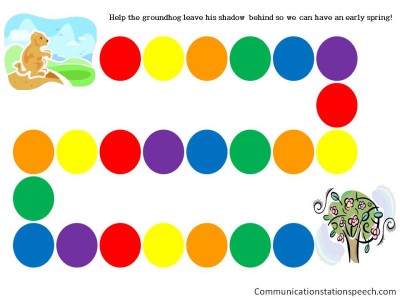
FREEBIE Friday: Groundhog Day Game board!

I was thinking of my family and friends freezing on the east coast and I thought, how great would it be if that groundhog does NOT see his shadow?  Early spring sounds like it’s just what we need to thaw everyone out!  So I made a quick fun simple little game board!  Here’s hoping for […]

Tip Tuesday: Creating Play Routines to Facilitate Language!

 The use of routines is one of the simplest ways an adult (parent/caregiver/therapist/educator, etc.) can facilitate language growth in young children.  This is especially true for children between 1-3 years of age (or children functioning between this developmental age range).  When speaking about routines, most often we think of “steps” to completing an act (e.g. […]

Visit Us On FacebookVisit Us On PinterestVisit Us On LinkedinVisit Us On Twitter